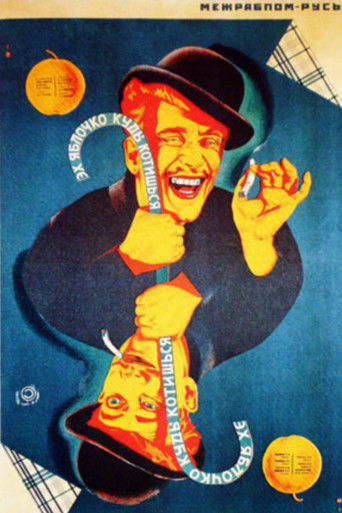
1918 Odessa. German occupiers plunder the city. Sailor Petrus, who has lagged behind the Red Army detachment, saves one of the victims of bandit terror - the girl Marusya... Years have passed. The time has come for peaceful construction in the country. Red commander Petrus and Marusya, who has become a teacher, meet in Moscow in one of the cafes, where both were attracted by the sounds of the popular song “Eh, apple...”, accompanying the adventure of the heroes.
A brave young commander, Tosun Bey, is dispatched by the Sultan to lead a storm-stranded Ottoman army through treacherous terrain toward Semlin amid relentless rain and chaos.
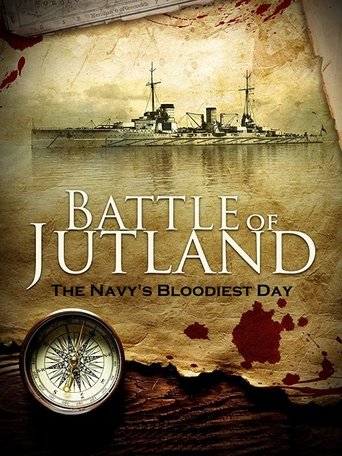
Documentary about the Battle of Jutland, a naval battle during World War I between the British and German fleets, which took place on 31 May and 1 June 1916 in the North Sea, off the west coast of Denmark. It re-creates the events of the battle and examines why the number of British warships that sank was so much higher than the number of German ships that were lost. Shown to commemorate the 100-year anniversary of the battle.
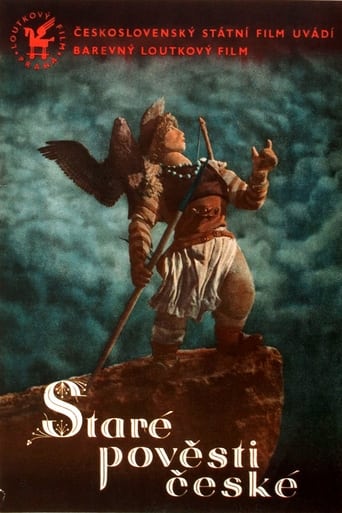
A monumental piece of art bringing the heroes of the ancient Czech myths back to life. The picture consists of seven parts: Cech the Forefather, Bivoj, Libuse, Premysl, Girls War, Horymir, Lucka War.
Clarissa Dickson Wright tracks down Britain's oldest known cookbook, The Forme of Cury. This 700-year-old scroll was written during the reign of King Richard II from recipes created by the king's master chefs. How did this ancient manuscript influence the way people eat today? On her culinary journey through medieval history she reawakens recipes that have lain dormant for centuries and discovers dishes that are still prepared now.
Country Dr. Robert Koch is desperate: a tuberculosis epidemic is decimating the children in his district and no one is able to do anything about it. Every fourth child is already sick and the parents must helplessly watch as their young ones die. Now Koch is undertaking to find the cause of the tuberculosis --- something he has already been working on for years --- which has been causing this plague of illness. His work is made more difficult by envy; for example, that of his teacher, who was wounded defending his honor. But his greatest obstacle is the famous Berliner scientist and Reichstag deputy, Privy Councilor Rudolf Virchow: He is extraordinarily skeptical of Koch's theory, that the cause for tuberculosis is a bacteria.
In the 1960s, the suburbs were meant to be modern havens for newcomers from rural France, Portugal, Spain, North Africa, and Africa, helping rebuild post-war France. Large housing complexes symbolized this ideal, offering comfort, heating, and electricity. But by the 1980s, disillusionment set in as economic crisis, unemployment, poverty, crime, racism, and police violence took hold. Mohamed Bouhafsi tells the story of a dream that didn’t last.
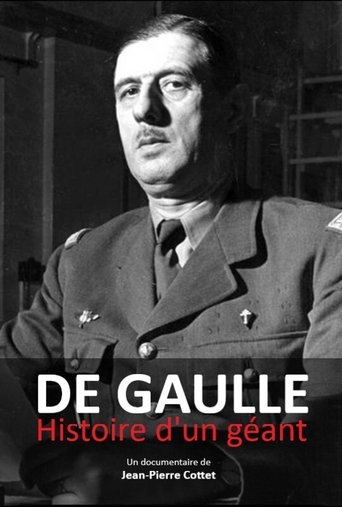
50 years after the death of General De Gaulle, this film retraces his life, from his birth in 1890 to his burial at Colombey-Les-Deux-Eglises in 1970.
Unique archives show a world that no longer exists: pre-war Poland in which two cultures: Jewish and Polish, coexisted wall-in-wall; cottage in a cottage; town next to town. "Po-lin" - meaning "we will stop here" in Yiddish - does not deny the painful past. It only shows that there was something more next to them. Worth remembering and - perhaps - reconstruction.
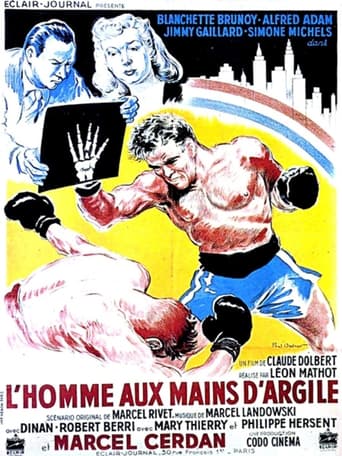
The fictionalized life, and interpreted by himself, of the popular boxing champion Marcel Cerdan. Training sessions, matches, victories, flight to the U.S.A. where the title of world champion is disputed, form the whole subject of the film.
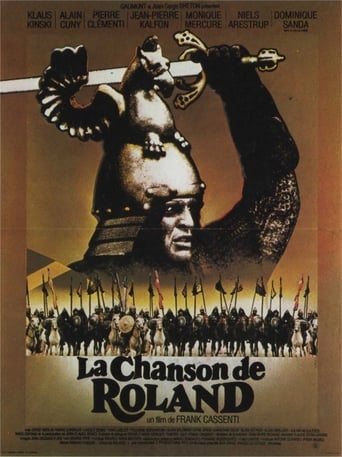
Roland des Roncesvalles is a legendary knight from the age of chivalry in France. In the 11th-century epic La Chanson de Roland, he is depicted as a key figure in halting the advance of the Arabs into France. In this story, the 10th-century legend is staged by a group of 12th-century pilgrims using the 11th-century poem. Their acting is interrupted by a violent peasant uprising, which kills many of the pilgrims. However, one of the survivors, is converted to the peasant cause and later speaks out in favor of more just treatment for the downtrodden.
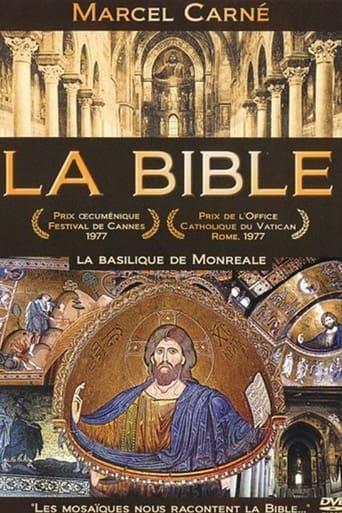
The Basilica of Monreale, near Palermo in Sicily acts as subject and springboard of Carné's final film; Its hundreds of gorgeous and intricate tiled mosaics vividly depict scenes from the Bible. Kinetic camerawork and dramatic narration of each scene compliment these stunning pieces in order to retell the Holy Book's age-old Story.
Seven wayward juveniles (the "Green Bottles" of the title) spend their days truanting and thieving. One by one they are caught and made to face the consequences of the choices they have made.
Biographical film about the work of the young Klement Gottwald. The story depicts his stay in Banská Bystrica, where he edited the Slovak communist press and helped organise the communist revolutionary movement.
A French television film inspired by events of the 18th century. The tragic failures of men, from 1764 to 1767, to bring down the Beast of Gévaudan. The first of fifteen episodes of the television series Le Tribunal de l'impossible.
The "new roadways" of the title refer to various projects, carried out in the USA's research laboratories, that benefit mankind. These include solar energy projects, making glass that can be rolled up like a carpet, and diet experiments with mice that might lead to a cure for color blindness.
Activate your FREE Account!
You must create an account to continue watching