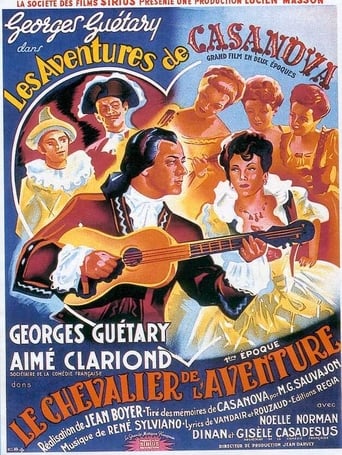
On his way to Paris, Casanova keeps on collecting female conquests, does not shy away from duels and gets into many a colorful adventure. Once in the capital, the fearless knight saves the honor of a great lady, conquers the niece of his implacable enemy but courts disaster for love of Coraline, a faithless opera dancer.
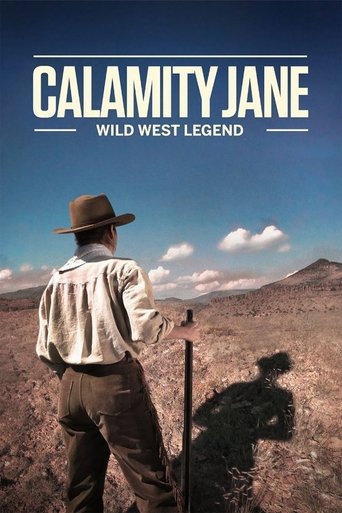
She fought the Indians alongside Custer, witnessed the birth of Deadwood and was close friends with Buffalo Bill. She was the terror of the plains, the outrage of the saloons, the oddest of her kind. But no one ever knew who she really was. Her name was Martha Canary, her name is Calamity Jane.
The film is picturing the faith of the old Serbian warrior Milisav Janjic, who fought against the German occupation in the Second World War as a member of the "Ravnogorski pokret". The storyline narrates his memories of the past and the war events in the spring of 1941 interwoven with the contemporary moments, the author features the attack of fascist Germany, the April war and the fall of the Kingdom of Yugoslavia, the misfortune placed upon the Serbian people, loss of freedom, birth of the freedom movement in Serbia and one Serbian soldier, who after 70 years of expatriation in America returns to his homeland.
Set in early 16th century Finland, a knight Olavi Gideoninpoika meets Mirjam Raakelintytär and falls in love. Mirjami hides in a monastery disguised as a choir boy, but is revealed by a monk Rasmus, who also desires her, and is put on trial.
A film about twin bothers Jacob & Esau
In May of 1941, a group of young army volunteers is recruited in Chumpon south of Bangkok. Many high-school students apply to join the group. When the Japanese army lands at Chumpon in December, they bravely fight against the army. The film is based on the true story of how young army volunteers fought to defend their country from the Japanese Army. A misunderstanding between the two nations caused the unnecessary war to break out.
The life and work of Jean-Baptiste Poquelin (1622-73), the greatest French-language playwright, Molière, who revolutionized theater by bringing to the stage, with lucidity and dazzling modernity, the themes of his time and who had a special relationship with Louis XIV, the dazzling Sun King, that allowed him to develop as an artist while using his talent, like that of many other artists of his time, to enhance his personal glory.
Roaming around with her best friend Wabuu, the curious and cheeky raccoon, Pocahontas, the beautiful chieftain daughter discovers a ship with a lot of strangers on the shore. "These White people will bring much woe to our people" predicts the chieftain. And actually, the gold-greedy captain of the ship starts a war on the Indians. Will Pocahontas succeed in preventing the inevitable fight and to save their people?
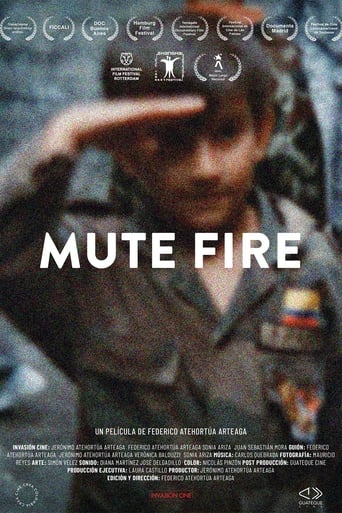
On 6 March 1906, four men were executed for the attempted murder of Colombian president Rafael Reyes. The event was photographed, and the photos were later used for a fictionalised film on the failed coup. From then on, cinema in this South American country has been inextricably linked to its violent history. Moving images have been used for historiography, propaganda, disinformation and to instil unity in a nation that refuses to come together. Falsos positivos, murdered youths disguised as guerrillas by the army to simulate military success, are a common element.
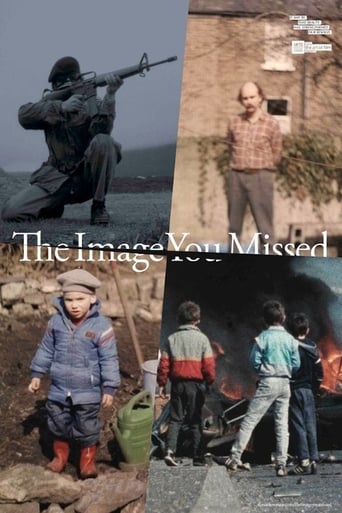
An Irish filmmaker grapples with the legacy of his estranged father, the late documentarian Arthur MacCaig, through MacCaig's decades-spanning archive of the conflict in Northern Ireland. Drawing on over 30 years of unique and never-seen-before footage, 'The Image You Missed' is an experimental essay film that weaves together a history of the Northern Irish 'Troubles' with the story of a son's search for his father. In the process, the film creates a candid encounter between two filmmakers born into different political moments, revealing their contrasting experiences of Irish nationalism, the role of images in social struggle, and the competing claims of personal and political responsibility.
This epic traces, from the Beginning, the lineage of the race of peace-loving people. Mankind at its best is highlighted as greatness of character across the centuries is displayed: Noah heeding God's command, Moses leading the Israelities, Jesus Christ dying to save humanity and promote His message of peace. Moving into our modern epoch: Columbus's discovery of America, the Declaration of Independence, the Emancipation Proclamation; A race of free humans committed to the proliferation of peace and freedom. What becomes of this race when autocratic powers threaten democracy in the time of the first World War?
In Hanoi, a French couple who had come to adopt a baby met Maï, an old woman who had a love affair with a French officer in 1945. She tells how, sent by de Gaulle to restore order, Leclerc negotiates with Ho Chi Minh, against the advice of d'Argenlieu, the high commissioner.
The Obersalzberg was an ordinary Bavarian mountain until Adolf Hitler discovered it in 1923. There at the Berghof, the Nazi leader spent his time surrounded by his most faithful lieutenants and his mistress, Eva Braun. Though mostly destroyed, remnants of the vast building complex still exist.
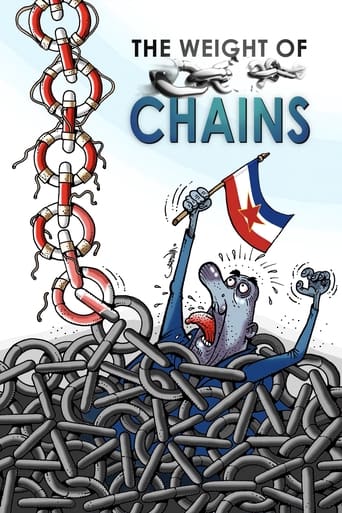
The Weight of Chains is a Canadian documentary film that takes a critical look at the role that the US, NATO and the EU played in the tragic breakup of a once peaceful and prosperous European state - Yugoslavia. The film, bursting with rare stock footage never before seen by Western audiences, is a creative first-hand look at why the West intervened in the Yugoslav conflict, with an impressive roster of interviews with academics, diplomats, media personalities and ordinary citizens of the former Yugoslav republics. This film also presents positive stories from the Yugoslav wars - people helping each other regardless of their ethnic background, stories of bravery and self-sacrifice.
The film is adapted from the 1961 Bollywood film Stree.
Activate your FREE Account!
You must create an account to continue watching