Renowned as the richest gold strike in North American mining history, the Klondike Gold Rush (1896-1899) set off a stampede of over 100,000 people on a colossal journey from Alaska to the gold fields of Canada's Yukon Territory. Filled with the frontier spirit, prospectors came and gave rise to what was one of the largest cities in Canada at that time - Dawson City. The boomtown, which became known as "the Paris of the North", earned the reputation as a place where lives could be revolutionized. Brought to life with excerpts from the celebrated book The Klondike Stampede - published in 1900 by Harper's Weekly correspondent Tappan Adney - and featuring interviews with award-winning author Charlotte Gray, and historians Terrence Cole and Michael Gates, The Klondike Gold Rush is an incredible story of determination, luck, fortune, and loss. In the end, it isn't all about the gold, but rather the journey to the Klondike itself.
The 1967 'Six-Day' war ended with Israel's decisive victory; conquering Jerusalem, Gaza, Sinai and the West Bank. It is a war portrayed, to this day, as a righteous undertaking - a radiant emblem of Jewish pride. One week after the war, a group of young kibbutzniks, led by renowned author Amos Oz, recorded intimate conversations with soldiers returning from the battlefield. The recording revealed an honest look at the moment Israel turned from David to Goliath. The Israeli army censored the recordings, allowing the kibbutzniks to publish only a fragment of the conversations. 'Censored Voices' reveals the original recordings for the first time.
A brave young commander, Tosun Bey, is dispatched by the Sultan to lead a storm-stranded Ottoman army through treacherous terrain toward Semlin amid relentless rain and chaos.
Film based on the life and patriotic activities of teacher Petro Nini Luarasi.
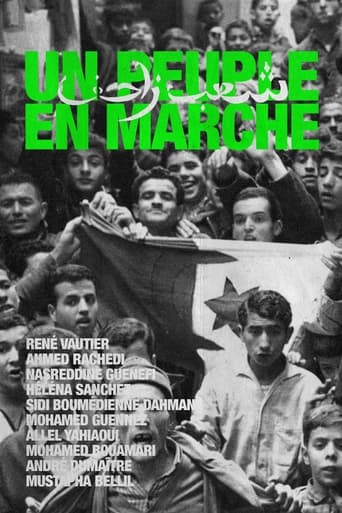
In 1962, René Vautier, together with some Algerian friends, organised the audio-visual formation centre Ben Aknoun to encourage a "dialogue in images" between the two factions. Together with his students he made a film that shows the history of the Algerian War and of the ALN (National Liberation Army), and life during the reconstruction.
Shows how important luck can be in a person's life.
A documentary about gay male cruising and public sex and how it has changed over the years.
After the World War I, Mussolini's perspective on life is severely altered; once a willful socialist reformer, now obsessed with the idea of power, he founds the National Fascist Party in 1921 and assumes political power in 1922, becoming the Duce, dictator of Italy. His success encourages Hitler to take power in Germany in 1933, opening the dark road to World War II. (Originally released as a two-part miniseries. Includes colorized archival footage.)
An independent documentary directed by Bobbito Garcia and Kevin Couliau. The film explores the definition, history, culture, social impact and global influence of New York's outdoor summer basketball scene, the worldwide 'Mecca' of the sport.
After decades of inaccessibility due to unrest and wars, teams of archaeologists from around the globe return to the greatest sites in Mesopotamia in a bid to save what can still be saved.
April 15, 1874, boulevard des Capucines, Paris: a group of young feverish painters shunned by the official Salon and mocked by the classical masters, chose to come together to exhibit their paintings freely, in the studio of photographer Nadar. At the end of a teeming century, when modernity was emerging, this group of rebellious artists, revolutionized the world of art.
Thierry is a former battered child, who has managed to build himself up despite the violence he has suffered. But the childhood traumas are still present, generating anguish and a perpetual lack of self-confidence. The announcement of the imminent death of the guilty father of the brutalities, and with whom Thierry broke all relation, sounds the hour of the accounts. The moment has come for him to put his memory and his feelings in order.
In 1924, female workers in a sardine cannery in Brittany went on strike.
Paris, 1789. A young revolutionary peasant and a maid of Queen Marie-Antoinette fall in love at the brink of the French Revolution.
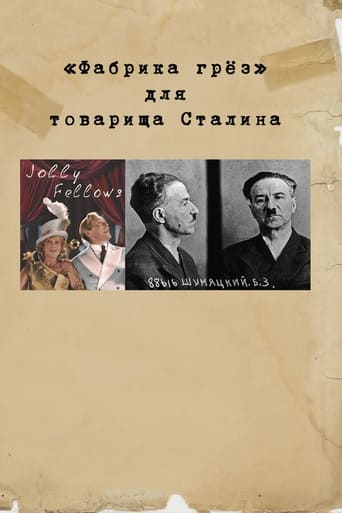
A documentary study of the circumstances and course of the drama that played out in the second half of the 30s around the project of creating "Soviet Hollywood" in the USSR - the center of the film industry in the image and likeness of the American "dream factory". Dramas in which human characters, ideological conflicts, and the spirit of the era were vividly manifested…
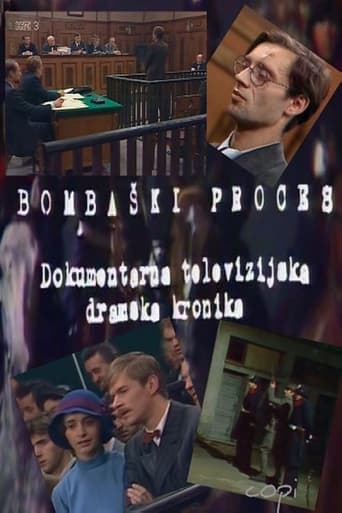
In 1928 young Communist activist was arrested and put on trial for anti-state activity. Years later he became known as Tito, Communist president of Yugoslavia, and this TV-movie was made for the 50th anniversary of those events.
How did the USSR - a country considered a second-rate industrial power, economically inferior to Germany, the USA and the UK - shape its victory over the armies of Hitler's regime, and secure its place among the winners?
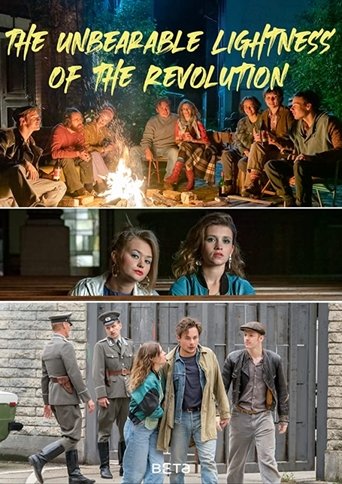
East Germany, 1988. 19-year-old Franka doesn't really care for politics. She prefers going to the disco and dreaming about seeing Bruce Springsteen and Michael Jackson live in concert. But beneath her carefree façade, she is scarred by the loss of her baby brother. But then she meets Stefan: He's young, idealistic, and part of an environmental activist group. A mix that makes Franka instantly make fall for him – and his group, which welcomes her with open arms. But this wild, revolutionary influence does not stay unnoticed: Her mother, who's with the Party, is worried about Franka. As Stefan's group loses the support of the church, leaving them vulnerable to the state, Stefan and Franka are soon in the government's line of fire…
Activate your FREE Account!
You must create an account to continue watching