Louis is a 27-year-old reservist and patriot, as is his childhood friend and longtime rival Bastien, who sees the war, like everything else, as an opportunity. One night, as their unit sleeps near the front, they're bombed. Louis and his comrades fall back in disarray and in the general panic lose their regiment. When they locate it again a few hours later, their general accuses them of desertion.
Orphans is the true story of a forbidden love affair set in the oppressive and violent atmosphere of nineteenth century Mexico. One man, Melchor Ocampo, driven by the twin passions of love and idealism, defies the stain of illegitimacy to shake off the crippling yoke of Spain and the Catholic Church. In so doing he becomes a founding figure of modern day Mexico.
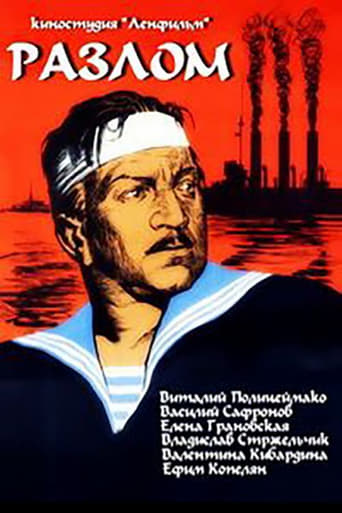
Kronstadt, 1917. Sailors aboard the revolutionary cruiser Zarya prepare for a general armed uprising. Kerensky's government decides to disarm the ships. The ship's crew expels delegates from the Provisional Government, refusing to obey orders. The cruiser's commander, Bersenev, sides with the sailors. Bersenev's family members react differently to this decision. Thus, a collapse occurs in the family of an old Russian intellectual...
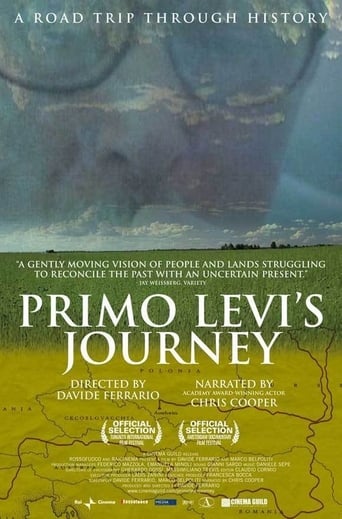
In February, 1945, Primo Levi (1919-1987) and other Auschwitz survivors set off for home. The journey took more then eight months. Sixty years later, a film crew retraces Levi's steps. Levi's words, mainly from "The Truce" (1963), tell us what he experienced. In turn, we see Poland's hollow post-war factories, nationalism in the Ukraine, Soviet-style Communism in Belarus, the abandoned town of Prypiat (Chernobyl), poverty and emigration from Moldavia, Italian factories in Romania, and on across Hungary and Slovakia to Munich where Levi's rage found no listeners. Then home to Turin. An aged Mario Rigoni Stern remembers his friend. What has changed? Some issues of the war remain unsettled.
A student whose parents died in the Gujarat pogrom receives an assignment on the same topic at his university. During his research, he meets everyone associated with the commission and tries to uncover various other aspects.
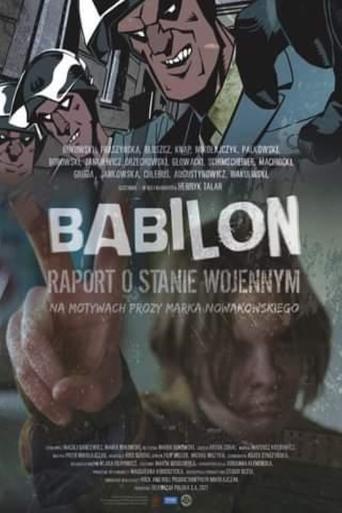
A Polish historical film, based on Marek Nowakowski's book "Report on Martial Law. Notes from Everyday Life." An interesting procedure of the production is the combination of a classic feature film with animation stylized as a comic book.
April 1945. In a dramatic operation the SS transports 139 special prisoners, and kin of the prisoners, into the Alps. The plan: to use the prisoners as bargaining chips in possible negotiations with the Allies. During the journey a number of prisoners plan their escape and experience six days between liberty and death, their fates in the hands of ruthless and increasingly nervous criminals. But the hostages band together and turn the tables with a clever ploy: they call in the Wehrmacht to aid them…
A true story about the tragic explosion at Halifax Harbour, Canada, in the early hours of December 6, 1917.
Set in 1982 communist Poland, a couple celebrates their wedding anniversary with their closest friends. But a simple accident creates an unexpected and terrifying turn of events, and in a matter of minutes, life long relationships are destroyed.
This film depicts the complete life of Sri Rama.
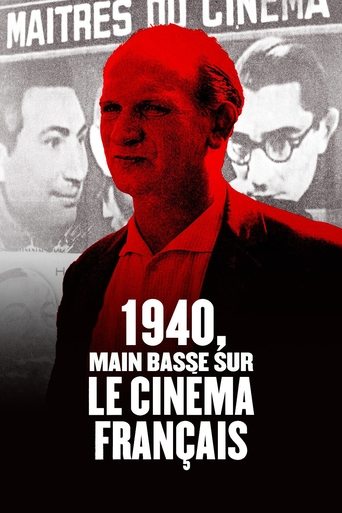
Paris, 1940. German occupation forces create a new film production company, Continental, and put Alfred Greven – producer, cinephile, and opportunistic businessman – in charge. During the occupation, under Joseph Goebbels’s orders, Greven hires the best artists and technicians of French cinema to produce successful, highly entertaining films, which are also strategically devoid of propaganda. Simultaneously, he takes advantage of the confiscation of Jewish property to purchase film theaters, studios and laboratories, in order to control the whole production line. His goal: to create a European Hollywood. Among the thirty feature films thus produced under the auspices of Continental, several are, to this day, considered classics of French cinema.
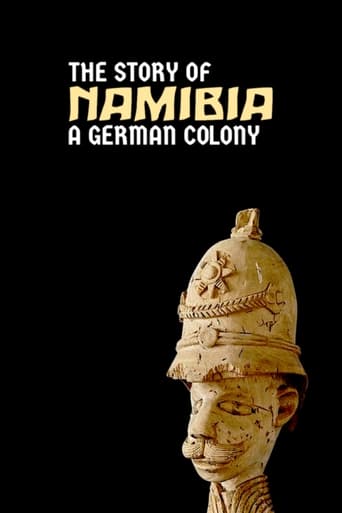
Germans colonized the land of Namibia, in southern Africa, during a brief period of time, from 1840 to the end of the World War I. The story of the so-called German South West Africa (1884-1915) is hideous; a hidden and silenced account of looting and genocide.
A parody version of the famous book by Charles Darwin. For adults.
Ibrahim, a Moroccan soldier, is sent to a deserted island off the Mediterranean coast of Morocco to monitor the movements of smugglers and illegal immigrants. One day, Ibrahim finds a Sub-Saharan man, Mamadou, washed up on the beach. While the unlikely pair tries to survive on the miniscule island, they inadvertently trigger a diplomatic incident that crescendos into a regional military crisis.
Rhodes of Africa is a 1936 British biographical film charting the life of Cecil Rhodes. It was directed by Berthold Viertel and starred Walter Huston, Oskar Homolka, Basil Sydney and Bernard Lee.
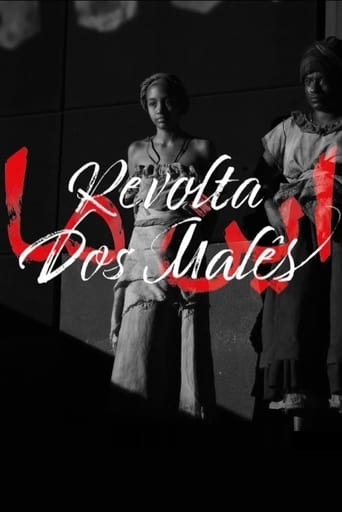
Salvador, Bahia, January 1835. After more than a decade of hard work, Guilhermina, 27, a slave of Muslim origin, finally gets the resources to buy her manumission, as well as that of Teresa, 11, her teenage daughter. But, contrary to an old promise, his “lord”, farmer Souza Velho, refuses to sell the girl's letter. When Pacific Licutan, Salvador's most esteemed Islamic leadership, is arrested by the Bahian authorities, the Muslim community goes into a boiling state and begins to articulate a jihad. In desperation, Guilhermina sees in the uprising the only way to win her daughter's freedom.
A retrospective of the classic game show, What's My Line, in which a four-member celebrity panel attempted to identify a contestant's occupation through yes or no questions. In addition, each episode featured a celebrity mystery guest that the panelists tried to identify the guest while blindfolded. The show ran from 1950-1967 and prominently featured John Daly, Bennett Cerf, Arlene Francis, and Dorothy Kilgallen. This documentary looked back on the show 25 years after it premiered.
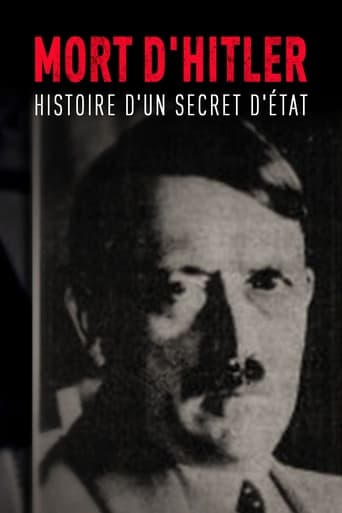
On April 30, 1945, while the Russian Army surrounded Berlin, Hitler committed suicide in his bunker. His body was discovered a few days later by the Soviets. He would be positively identified after a top secret inquest in which Hitler's personal dentist would play a central role. And yet, at the same time, Stalin publicly declared that his army was unable to find the Führer's body, choosing to let the wildest rumors develop and going so far as to accuse some of his Allies of having aided the monster's probable escape. What secrets were hidden behind this dissimulation? What happened then to the two ladies involved in the identification of Hitler’s body?
Set in Remies, France in 1941 during World War II, a Jewish man tries to escape Nazi persecution and a chance encounter with a woman sitting next to him on the train. Based on a true story.
Activate your FREE Account!
You must create an account to continue watching