A young boy embarks on a quest to find a clan of magical forest dwellers, constantly on the run from an evil force which attempts at every turn to stop him.
The film tells the story of the removal of Laguna in the Paraguayan War. The nonlinear storyline starts showing the military visiting the graveyard of heroes of the battle. Then, a flashback shows the hardships they have endured Brazilian forces that strategic withdrawal. It is the first film entirely national historical reenactment with sound in Brazil.
Queens of Troy follows a group of Syrian Refugee women as they put on their own updated, Arabic version of Euripides' ancient Greek play about refugees in Amman, Jordan.
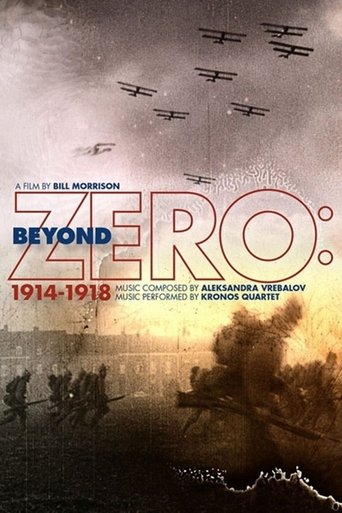
A response in music and film to the conflict that launched a century of war, and a celebration of the power of art to keep us sane and offer us comfort. Beyond Zero: 1914-1918 brings together three of the world's most pioneering artists: the Kronos Quartet, known for decades for their trailblazing performances and collaborations; acclaimed Serbian composer Aleksandra Vrebalov; and filmmaker Bill Morrison, respected for his work with rare and even partially destroyed archive images.
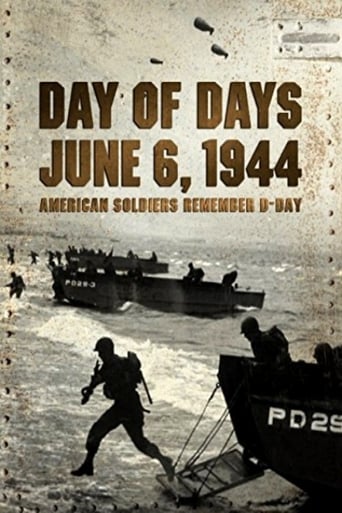
Day of Days: June 6, 1944 commemorates the 70th anniversary of the Normandy landing by bringing together American D-Day veterans to share their experiences from that fateful day. As they vividly recall details from their ordeal--from the perils of the amphibious assault to the invasion's gruesome aftermath--their testimony yields long-buried and often painful memories. They recount their transformations from boys to men, reveal their uneasiness with the term "hero," and grapple with why they survived when so many others did not.
1944. At the end of the war ensign Bojtár gets from the captivity of the partisans into that of the Hungarian Nazi and he escapes at the price of a quasi-murder. He has to hide, the more so because his victim did not die and searches for him.
This animated short by Norman McLaren is a publicity message for a war bond campaign. Symbols, a stick man and lettering are drawn directly on 35mm film stock and synchronized with a brass band rendition of Sousa's march "The Thunderer."
Beirut – or indeed maybe any city, anywhere – is at war with itself. Here, no conflict is ever resolved, and no wall is ever repaired. The explosions resonate better in this city full of holes. Young men who live here are caught between military service and religious affiliation. I visit some friends, gather their suicidal testaments. No one goes anywhere. I cross my city in every way possible, day and night. 16mm
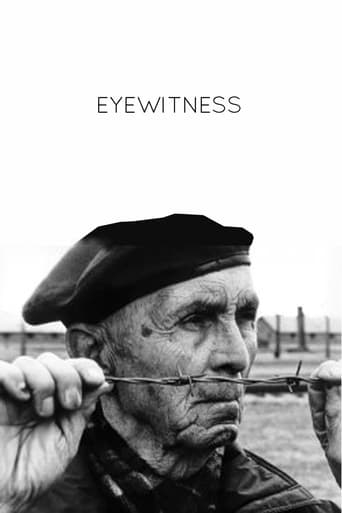
Eyewitness explores the lives of three artists forced to work in secret while living in Nazi death camps: Jan Komski, Dinah Gottliebova, and Felix Nussbaum, and who all witnessed and painted the horrors of the Holocaust.
The Thai government sends a man in undercover to a guerrilla compound to bring down Thailand's biggest drug lord, who supplies opium to most of the world.
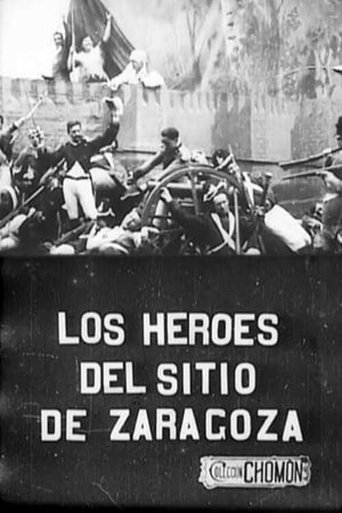
A short drama featuring three fictitious scenes of the Spanish War of Independence (1808-1814).
Up the road comes a detachment of infantry, firing, advancing, kneeling and firing, again and again...
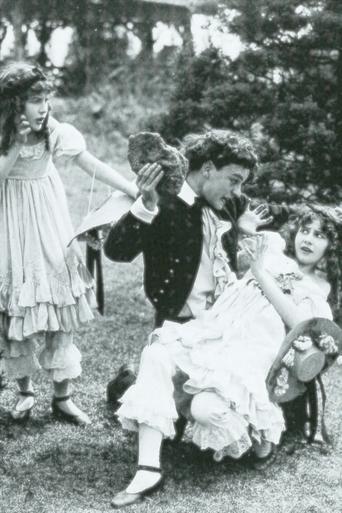
In the 1850s twin girls fall in love with the same young man, and must struggle with their feelings once he goes off to fight in the Civil War.
Filmmaker Trevor Graham is an Australian 'hummus tragic'. Every week in his Bondi Beach home he observes the hummus making ritual, mashing chickpeas, lemon juice, garlic and tahina. But when the Hummus War erupted in 2008, among the usual suspects, Israel, Lebanon and Palestine, Graham was hungry for more. But this war ha no soldiers, bullets or tanks. Just chickpeas and hummus. Make Hummus Not War is a humorous homage to the chickpea's most distinguished dish. But there's a personal story, how Graham became a hummus tragic, a father who served in Palestine during WW2 and two lovers in his life, one Syrian, one Jewish, with whom he shared a great culinary passion.
Lionel Rogosin's plea for humanity and against war and fascism. For two years, Rogosin traveled to twelve countries to collect footage of war atrocities from their archives. He interspersed these harrowing images with scenes of a London cocktail party's mundane chatter. Good Times, Wonderful Times was released in 1964 at the height of the Vietnam War, and became one of the great anti-war films of the era.
There is no plot.. but rather an observation of Platoon 1141, Company C, 1st Recruit Training Battalion, Marine Corps Recruit Depot San Diego, California. From the initial bus ride to the depot until graduation.
British composer Leo Geyer discovered 200 forgotten scores in the Auschwitz archives, as he and his orchestra bring this music to life once more.
Activate your FREE Account!
You must create an account to continue watching