The main character is a colonel, Hero of Ukraine, presently the airborne forces commander, and up until March 2015 the commander of the 95th air brigade. His name is Mikhail Zabrodsky, and he leads not just his 95th brigade but all the other Highly Mobile Airborne Forces. Just as all of us, he wants the Ukrainian warriors not to die any more, be they troopers, tankmen or cannoneers. “I would happily give up the star of the Hero of Ukraine in exchange for peace,” the colonel says. The film plot is based on the longest crackdown in military history, which took place in August 2014 from Mariupol (which was reached after breaking the enemy’s defense) to Slavyansk; 470 kilometers in total, out of which 170 kilometers were to the other side of the front line.
The film is a continuation of the films I Died to Live in 1984 and After My Funeral in 1989. As in the second part, the action consists of fictional events (the first part was about real events). Błażejewski is caught in a round-up. Leopold Wójcik's papers were found with him. The pointer lets Wójcik know about this event and warns his colleagues from Kielce who manage to escape. During the interrogation, Błażejewski denies the papers that were found with him. Soon he is released. This does not mean the end of problems for people dealing with Wójcik's case.
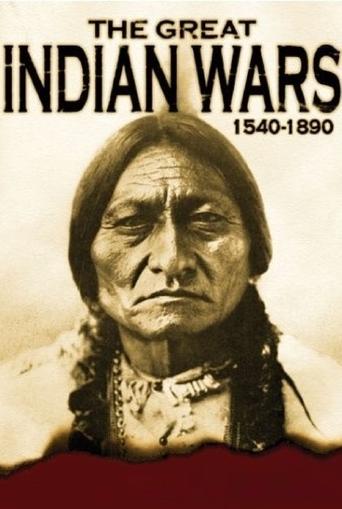
The year 1540 was a crucial turning point in American history. The Great Indian Wars were incited by Francisco Vazquez de Coronado when his expedition to the Great Plains launched the inevitable 350-year struggle between the white man and the American Indians. From that point forward, the series of battles between the military and civilian forces of the United States and the native American Indians began when blood was shed and ultimately tens of thousands of lives were lost on both sides. The Battle of Tippicanoe, the Battle of Horseshoe Band, all three Seminole Wars and the Battle of Little Big Horn were some of the most important conflicts that led up to the last massacre, the Battle of Wounded Knee, where America's landscape would be forever changed!
An aviator heads out in his fighter plane to fight in WWI, and his girlfriend watches as he leaves and waits for his return.
The piece, an experiment that begins on the skin, in the skins of a family that spoke in silence about a tropical dictatorship in the 1980s, the dictatorship of a house. The skins whispered silently and their voices were heard in the corners, on the walls, in the cooking pot, on the soupspoon, on the wet beans. As the soldiers marched in the streets, the echo of their footsteps resonated in the walls of the home of a military man’s family, a house where the words were forgotten. With few oral resources, some photographs and some stolen confessions, the director proposes an exploration that goes from the personal to the political through a fictionalized experience of the family story related to the dictatorship of Panama.
Idriss Gabel and Marie Calvas are the grandson and granddaughter of Rudolf Hess's last chaplain in Berlin-Spandau prison. Hess (1894-1987), a fanatical anti-Semite, was Adolf Hitler's deputy in Nazi Germany and personally participated in the formulation of the Nuremberg Race Laws. As a French military chaplain, Charles Gabel was the only person authorized to speak with Hess in private for almost ten years. In this documentary, his grandchildren ask: What kind of relationship did their grandfather have with this member of the Nazi leadership? Hess was sentenced to life imprisonment in 1946 as part of the Nuremberg Trials of major war criminals. He served his sentence throughout the Cold War as the sole inmate of the huge Spandau Prison. In 1987, at the age of 93, he took his own life.
The story of liberation of Saigon by People's Army of Vietnam and National Liberation Front of South Vietnam on 30 April 1975.
In 1936, the Spanish Civil War has just begun. Rebel army is taking at force a republican village, So, Juan and "Bicho" are obligated to go away the death. They will try to arrive the mines, where some refugees want to create a resistance against the rebels. Will they get their purpose?
Ambulances and British troops crossing the Tugela River over the pontoon bridge near Trichardt's Drift, during the British retreat from Spion Kop in the Boer War, 25 January 1900.
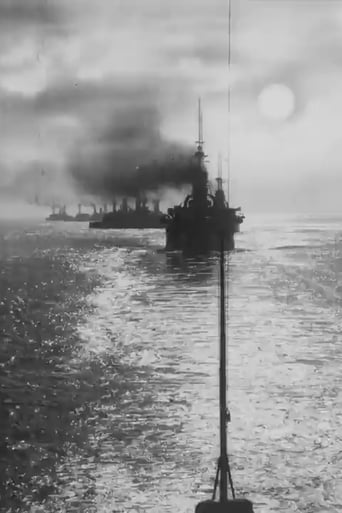
A single shot of a fleet of warships at sea, with a sunset sky superimposed from another sequence to complete the effect.
After school until 16.50, the kids of Broome primary are not boys but soldiers, embattled in an epic Boondi war.
This feature length documentary is a personal account of the siege of Sarajevo from the point of view of a Bosnian Australian, Tahir Cambis, who spent the last six months of the war filming the conflict and its effects on the civilian population. The two main subjects in the film are a Sarajevo family whose young daughter is killed a day after she is filmed in a dance competition; and an 8 year old girl, Amira, whose eye witness account of murder and rape becomes a diary of catharsis.
Despite the bombs which he suffers from at the war front, war correspondent, Col. Heeza Liar succeeds to foil the enemy lines.
The world's press gather at Dover, England awaiting a threatened German attack.
Almost 70 years after its sinking, the powerful headlights of two high-tech research submersibles illuminate the silhouette of the biggest German battleship ever. The pride of the German Kriegsmarine: Bismarck. In 1941 the Bismarck was sent out to raid and destroy allied supply convoys in the North Atlantic. With resources vital to their nation under threat, the British fleet went after this supposedly unsinkable ship. But who actually sank the steel giant?
Activate your FREE Account!
You must create an account to continue watching