Canada: A People's History - Episode 14: 1940 to 1946 CE. Canada comes of age in the anguish of World War II, with soldiers on the beaches at Dieppe and women in the industrial work force back home. The country's military role, and the domestic, social and political consequences of the war are traced through poignant stories of Canadians on both sides of the Atlantic. The horrific global conflict steals the innocence of a generation... but brings hope for a new future.
A look at the incidents of June 25, 1950 which marked the beginning of the Korean War and which found the South to be woefully unprepared.
Oswald's country is at war, like many other volunters he joins the army and finds himself soon in the trenches. A short battle leaves him wounded, but at least in the field hospital where his girlfriend is working.
John Duns Scotus was a Franciscan friar who provided the theological explanation of the Immaculate Conception of Mary in the early fourteenth century (500 years before it was proclaimed as a Dogma of Faith of the Catholic Church). "Duns Scotus" chronicles the life and teachings of the blessed in the years between 1303 and 1305. The film also offers a brief look at the childhood of this man and his will to join the Franciscan Order since childhood
In a neverland, King Wasit Aron organises forces to reclaim his throne that was seized by Abu Garin. The greedy Abu Garin is not satisfied, as he still wants to marry Wasit's daughter, Tirza, and get Wasit’s sacred stone. The battle between their two forces continues to go on. Then, King Wasit meets Rhoma, a wanderer who is always carrying a guitar. After the wanderer shows his power in fighting and his skill in healing the wounds of the King's daughter, Tirzah, King Wasit and his followers are successfully persuaded by Rhoma to convert to Islam.
Down under the constant attacks of the German and Bulgarian forces, headquarters one of the partisan detachment in the midst of a severe winter and snow and difficult terrain, with many wounded, he decided to leave the mountain Jastrebac. Gvozden, a peasant from that area, brave warrior, opposes such a decision, was gets ready to leave the unit before detachment. In the interests of discipline, however, Gvozden was convicted and executed on the spot, although it regrets the whole squad.
Dear Enemy tells the true story of the director’s grandfather who became friends with a German officer during the WWII German occupation of Albania while hiding a partisan, an Italian soldier and a Jewish watchmaker in his cellar.
The Theatre Royal Masterclass Trust and the Royal British Legion presents The Two Worlds of Charlie F, a soldier’s view of service, injury and recovery. Moving from the war in Afghanistan, through the dream world of morphine-induced hallucinations, to the physio rooms of Headley Court, the play explores the consequences of injury, both physical and psychological, and its effects on others as the soldiers fight to win the new battle for survival at home. Taken from the personal experiences of wounded, injured and sick service personnel The Two Worlds of Charlie F is a darkly comic, authentic and uplifting tale of survival, made even more powerful by the soldiers performing it themselves. Although the play is inspired by actual experiences, the names of the characters have been changed. A play by Owen Sheers Directed by Stephen Rayne Composed by Jason Carr Designed by Anthony Lamble Lighting Design William Reynolds Filmed by Uppercut Films Ltd
This poetic TV drama, loosely based on Guy de Maupassant’s short story, tells about wo soldiers in their leisure time who are having fun with a milkmaid. Later one of them dies in the battle, leaving the milkmaid in sorrow…
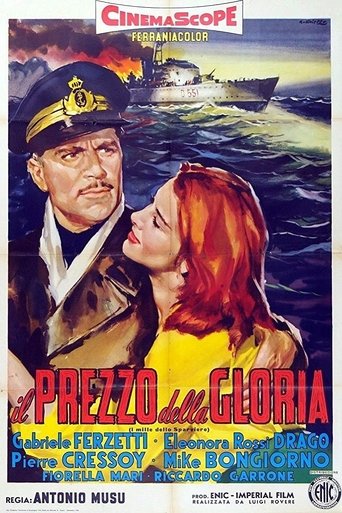
A destroyer departs from the port of Taranto with orders to take a load of petrol to Tobruk at all costs.
In August 1944, 1104 Japanese prisoners of war at the Australian POW camp at Cowra stage a mass breakout. Four guards are killed in the escape, and 231 prisoners die by wounds sustained or suicide, while 334 prisoners are recaptured over the subsequent nine days.
Jagoda is young woman who lives in poor section of Zagreb together with her disfunctional family. Mother is dying, father cares only about fishing, brother is an alcoholic and uncle is a war refugee. Her relationship with young soldier isn't any better because they can't find place to make love.
During Word War II, an Air Corps pilot must rescue a group of POWS on a German island before the Invasion of Normandy.
The main character is Anna, an outstanding pediatrician. She survived the harsh years of war in a concentration camp and cannot accept the behavior of her daughter Natalia, who uses her connections and cares only about material goods. Anna is reminded of 1939, when Piotr, who had been missing for forty-five years, arrives in Poland. Together, they visit places that are important to them: Auschwitz, Sachsenhausen, and Ravensbruck.
On their journey West, Captain von Stock and his battle group are arrive in a small village located not far from a strategically important river crossing. The village is frequented by a constant stream of refugees fleeing the advancing Soviet army.
March 1943. In the middle of the Italian occupation of Corsica, two Communist resistance brothers strategically link up with two Italian trouffions in order to get the information necessary to organize the parachute drops on the Balagne. A real friendship is born between these men, the first steps of the reversal of the situation and of the alliance that followed the Allied landing in Ajaccio in September of the same year.
A criminal mastermind uses a "death ray" machine to bring down government airplanes. Police dog, Silverstreak, aids in capturing the insane inventor of the machine. Masked aviator Pilot X is part of the "Air Hawks" gang who threaten the Baker Aircraft Company. Pilot X's actions are focused on stealing Baker's Aerometer, a revolutionary navigational instrument. World-famous aviatrix, Fawn Nesbitt, aids in combatting the attacks on Baker's aircraft.
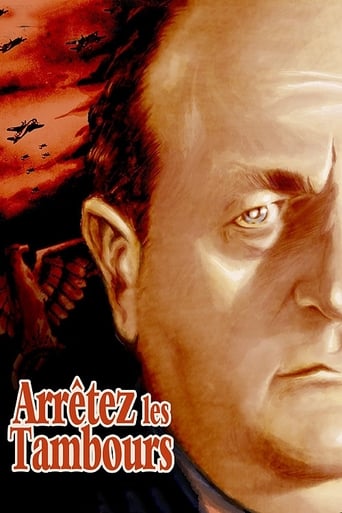
In 1944, in a small village in Calvados, just as the Allies landed, a British plane was shot down. The wounded pilot seeks help. All the villagers, who speak only of resistance, refuse to help, for fear of reprisals. Only the mayor, Dr. Leproux, takes him in and nurses him back to health, then entrusts him to the Resistance. But the Germans get wind of the story and arrest Leproux. He is saved by Major Frantz. But the budding friendship between these two men "doesn't stop the drums", and the war is on.
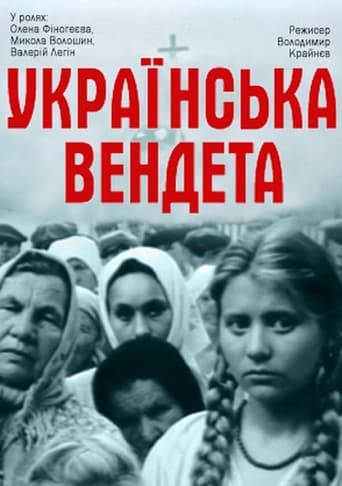
The Hitlerian army has merely encroached upon the territory of Ukraine, and the majority of the local people have been already ready to cave in to a new regime. The Ukrainian policemen have killed the boy. It is clear that there is no hope to expect the justice from the invaders, that’s why the killed boy’s mother declares the war on the hangsman.
1944 Sergeant Vasily Kalina returns to his native village of Pastoron after the hospital. But he does not find the village: retreating, the Germans burned all the houses and mined the fields. The restoration of the economy is led by the former commander of the partisan detachment Grigory Gorovoy. He appoints Vasily as the chairman of the collective farm. Soon Kalina learns that Claudia, whom he loved before the war, considering him dead, married Gorovoy. The current situation is not an easy test for all three...
Activate your FREE Account!
You must create an account to continue watching